It’s 2024. The masks are off and the toilet paper is back on the shelves. Finally your favorite snack is back in stock and you add it to your cart.
Normally, I wouldn’t think twice about something like this! You’re already planning to spend the money, what’s the problem?
They’re charging you more and you don’t even know it.
Welcome to the world of Shrinkflation.
What is Shrinkflation?
Shrinkflation occurs when manufacturers reduce the size or quantity of a product while keeping the price the same. Essentially, it’s a way for companies to manage rising costs without increasing prices. (Even though they technically are.)
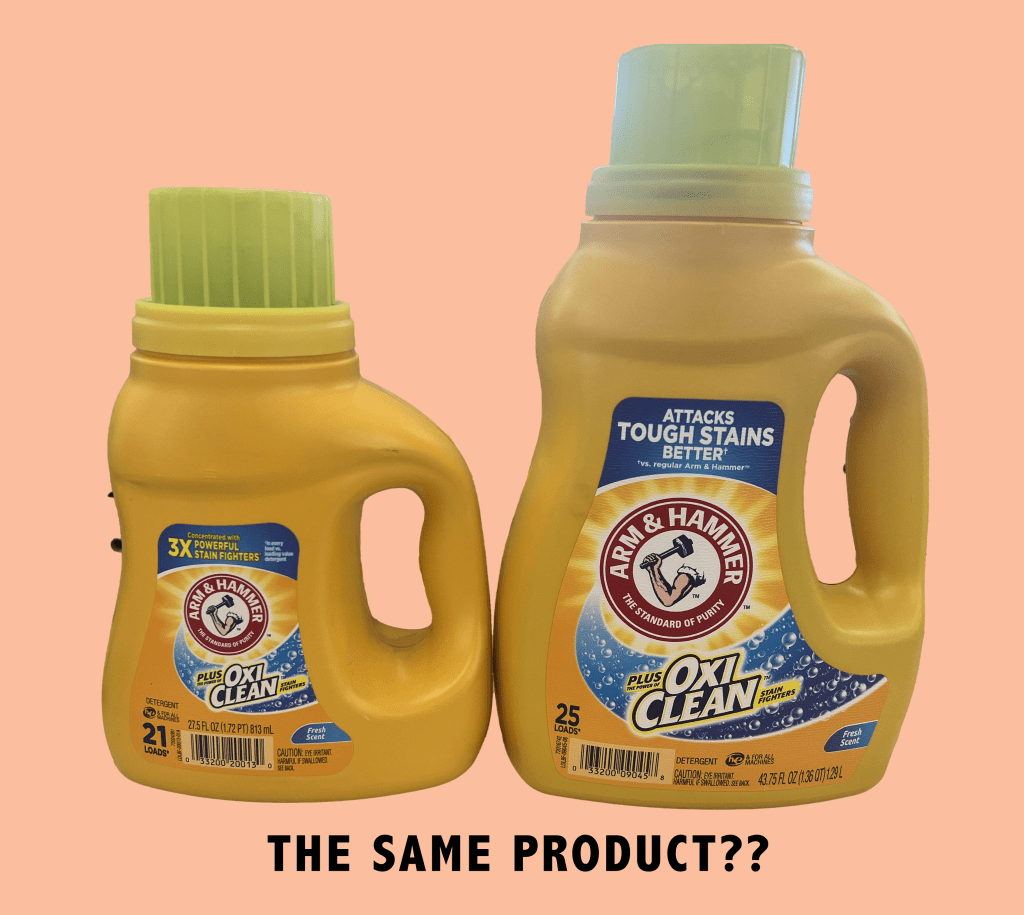
It isn’t super noticeable unless you’re like me and had a Walgreens pick-up order with three different-sized Arm & Hammer laundry detergents that all cost the same. (Yes, I checked. No, it was not a mistake.)
Why Does Shrinkflation Happen?
- Increased Raw Material Costs:
- Higher prices for raw materials. The cycle of consumerism, supply and demand, etc, etc.
- Higher Labor Costs:
- Wage increases and better working conditions. (Think about any time fast food prices rise.)
- Energy and Transportation Costs:
- Fluctuating fuel prices and transportation expenses. Kermit noted that it isn’t easy being green and while NetZero is ideal, we have big financial and resource hurdles to jump through before that’s a thing.
- Supply Chain Disruptions:
- Events like natural disasters, geopolitical tensions and pandemics. Specifically, the 2020 shutdown allowed companies to change out most products without otice as consumer demand was so high.
The Impact on Consumers
- Perceived Value:
- Personally, when big companies make changes like this without any kind of announcement or opportunity for adjustment, it feels deceiving. And, in cases like my Walgreens pick-up, that isn’t entirely incorrect whether intentional or not because stores require transition periods. As we see more online ordering, consistency between advertised products vs physical products is more important than ever.
- Budgeting Challenges:
- Difficulty in accurately budgeting expenses. I feel like I’m double-checking my budget every week and it drives me crazy!
- Increased Consumption:
- Smaller portions lead to higher overall spending. For example, the bag of dog food that I grabbed for Ivy? Previously it was 30lbs a bag, now it’s 25lbs a bag. (Here I thought my workouts were helping.) It’s 20% more expensive than it was two years ago.
All of these shrinking changes add up and the people who end up barring the highest burden are us, the consumers.
How to Spot Shrinkflation
- Check the Net Weight:
- Compare the net weight or volume listed on the packaging. Again, be mindful when ordering online. If you aren’t sure about your product, compare it to other local vendors.
- Do the Math:
- I know, I hate it too. But when it comes to BS like this, I’m doing the math. Compare unit prices or break things down into something simple. I use $/oz as a simple comparison tool and it’s helped us save in the long run. Most of our posts will also include a pricing breakdown.
- Read Reviews:
- Stay informed! It requires more time but it’s sure worth it. Videos, pictures or anything showing a product will help you be more informed about your decision.
Bottom Line
Shrinkflation is a pain in the ass. I hate it. You cannot imagine the amount of b*tching I did at the local pet store when I first noticed the change. (Not to the staff, just aloud to myself.)
The only way to change it? Be mindful. Be aware
 Coupons > Capitalism
Leave a comment